Seamless Pattern Floral Watercolor 38: A Practical Guide to Usage and Quality
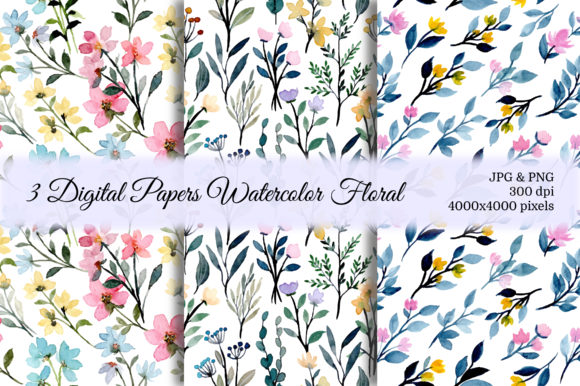
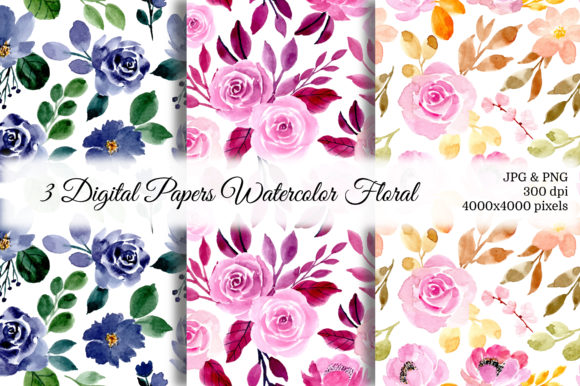
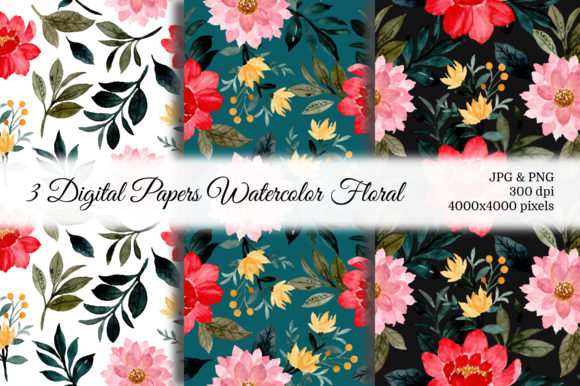
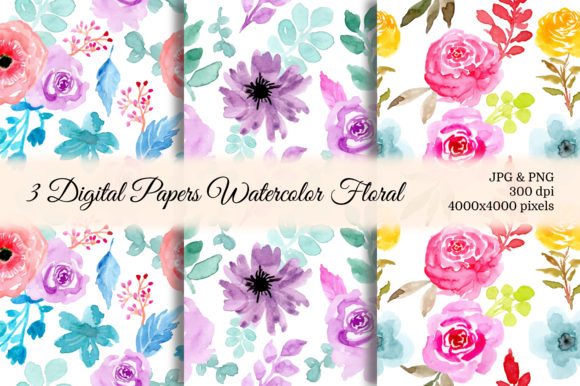
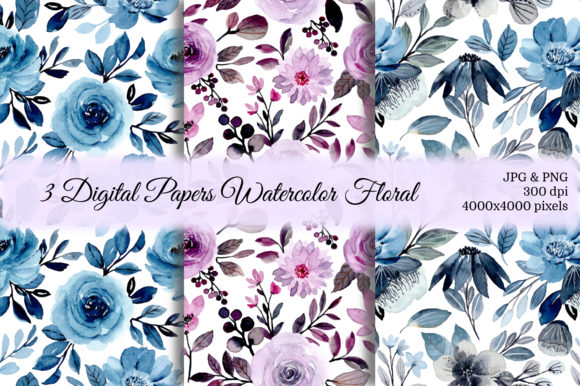
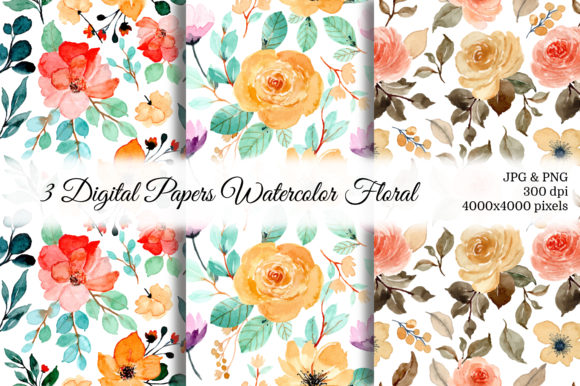
When integrating botanical aesthetics into digital or print projects, the specific asset known as Seamless Pattern Floral Watercolor 38 offers a versatile foundation for designers and creators. This collection is not merely a decorative element; it is a technical resource designed to bridge the gap between organic artistry and digital precision. Understanding exactly what this package entails is the first step toward avoiding common workflow disruptions. You receive three distinct seamless pattern designs featuring watercolor florals, provided in both JPG format with a white background and PNG format with a transparent background. Each file measures 4000×4000 pixels at 300 DPI, ensuring high-resolution output suitable for professional printing and detailed screen display.
The interest in this specific set stems from its dual-format utility and substantial resolution. Many creators seek out Seamless Pattern Floral Watercolor 38 because watercolor textures are notoriously difficult to digitize without losing their delicate edge definition. Having access to pre-tiled, high-DPI assets eliminates hours of manual scanning and editing. However, possessing high-quality files does not automatically guarantee high-quality results. The difference between a polished final product and an amateurish attempt often lies in how these specific technical specifications are applied. Overlooking the nuances of file formats, resolution scaling, and color management can turn a premium asset into a source of frustration.
Navigating File Formats: JPG vs. PNG Transparency
One of the most frequent mistakes occurs when users default to the JPG version without considering the compositional needs of their project. While the JPG files included in Seamless Pattern Floral Watercolor 38 are excellent for backgrounds where a solid white base is desired, they are limiting for layered designs. A common error involves placing a white-background JPG over a colored or textured backdrop, resulting in an unsightly white box that breaks the visual flow. This forces designers to spend unnecessary time masking out backgrounds or attempting to blend modes that often result in washed-out colors.
The corrective approach is to utilize the PNG transparent background versions whenever you intend to overlay the floral pattern onto non-white surfaces. The transparency in these files preserves the authentic watercolor bleed and soft edges, which are essential for maintaining the hand-painted aesthetic. Before starting your design, determine your background color. If it is anything other than pure white, or if you plan to use the pattern as a texture overlay with blending modes like Multiply or Overlay, the PNG format is mandatory. Reserve the JPGs for stationery backgrounds, web headers with white bases, or quick mockups where layering complexity is minimal.
Resolution Misconceptions and Print Clarity
The 4000×4000 pixel dimension at 300 DPI is a significant specification, yet it is frequently misunderstood regarding physical print size. A dangerous assumption is that "high resolution" means infinite scalability. At 300 DPI, a 4000-pixel image yields a crisp print area of approximately 13.3 inches by 13.3 inches. Problems arise when users attempt to stretch this single tile across a larger surface, such as a duvet cover or a large-format banner, without adjusting the tiling frequency. Stretching beyond the native resolution introduces pixelation and blurriness, destroying the intricate brushwork details that define watercolor art.
To avoid quality degradation, calculate your required print dimensions before applying the pattern. If your project exceeds 13 inches in width or height, do not scale up the single image. Instead, use the seamless tiling function in your design software to repeat the pattern. Because Seamless Pattern Floral Watercolor 38 is engineered to be seamless, repeating the tile maintains perfect continuity without visible seams. This allows you to cover vast areas while retaining the sharpness of the original 300 DPI scan. Always check your document’s effective PPI after placement; if it drops below 250 for print, revert to tiling rather than stretching.
Color Management and Screen-to-Print Discrepancies
Watercolor patterns rely heavily on subtle gradients and translucent washes, making them particularly sensitive to color profile mismatches. A prevalent issue is designing in RGB mode using these assets and sending the file directly to a commercial printer without conversion. Screens emit light, making colors appear vibrant and luminous, while ink absorbs light, naturally dulling the output. Users often express disappointment when their printed floral patterns look muddy or desaturated compared to their monitor preview.
Mitigate this risk by understanding the intended output medium. If you are creating digital-only content for websites or social media, keep the files in RGB to preserve brightness. For physical products like packaging, textiles, or stationery, convert your workspace to CMYK early in the process. When working with Seamless Pattern Floral Watercolor 38, perform a test print on your target paper stock. Watercolor effects interact differently with matte versus glossy papers; matte paper tends to absorb more ink, potentially darkening the mid-tones. Adjusting curves or levels specifically for the print profile is a necessary step that saves money on reprints and ensures client satisfaction.
Evaluating Seamlessness and Tiling Artifacts
Even with assets labeled as seamless, application errors can create visible grid lines. This usually happens when design software applies a slight stroke or border to the image container, or when scaling is done unevenly. Another oversight is failing to verify the seam integrity at 100% zoom before finalizing a layout. What looks acceptable at a zoomed-out view may reveal hairline fractures or misaligned floral stems upon closer inspection.
Always inspect your tiled layout at actual size (100%) on your screen. If you notice repetitive artifacts or alignment issues, check your layer styles to ensure no strokes or shadows are being applied to the pattern layer itself. Additionally, verify that your software’s snapping or grid settings aren't forcing the pattern into a slightly incorrect dimension. True seamlessness relies on mathematical precision; even a one-pixel shift can create a visible line across a large print run. Taking thirty seconds to validate the tile alignment prevents costly corrections later.
Licensing and Commercial Application Checks
Beyond technical execution, overlooking usage rights is a critical business error. Creators often assume that purchasing a digital download grants unlimited commercial freedom. However, terms vary significantly between personal use, small business licensing, and extended commercial rights. Using Seamless Pattern Floral Watercolor 38 in a product intended for mass retail without verifying the specific license tier can lead to legal complications or platform takedowns.
Before incorporating these patterns into merchandise for sale, review the vendor’s licensing agreement thoroughly. Confirm whether attribution is required, if there is a cap on unit sales, or if the pattern must be significantly altered to qualify as a new derivative work. Responsible creators treat licensing verification as part of their pre-production checklist, just like color proofing. This diligence protects your business reputation and ensures that your creative investment remains sustainable and secure.
Making Informed Creative Decisions
Seamless Pattern Floral Watercolor 38 represents a valuable tool for enhancing visual projects, provided it is handled with technical awareness. By respecting the distinction between file formats, adhering to resolution limits, managing color profiles accurately, and verifying both seam integrity and licensing terms, you transform a simple digital asset into a cornerstone of professional design. The goal is to let the beauty of the watercolor art shine through without technical distractions. Thoughtful preparation ensures that your final output honors the quality of the source material and meets the expectations of your audience or clients.