Evaluating Seamless Pattern Floral Watercolor 30 for Professional Design Projects
Selecting the right digital asset requires balancing aesthetic appeal with technical utility. When designers and crafters evaluate resources like Seamless Pattern Floral Watercolor 30, the decision often hinges on specific project requirements rather than general preference. This collection distinguishes itself through a combination of high-resolution specifications and dual-format delivery, addressing common friction points in surface pattern design. Understanding the technical parameters and practical applications of this specific set allows for a more informed comparison against other market alternatives, ensuring the chosen resource aligns with both creative vision and production constraints.
Technical Specifications and Resolution Standards
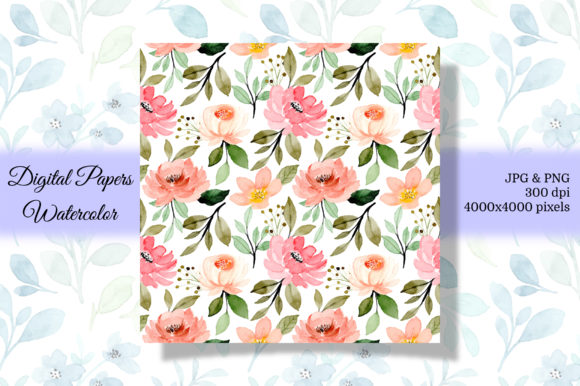
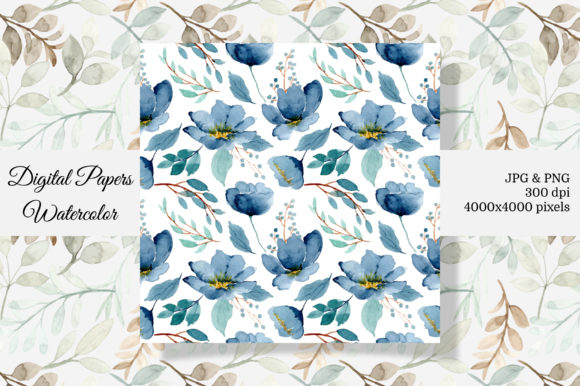
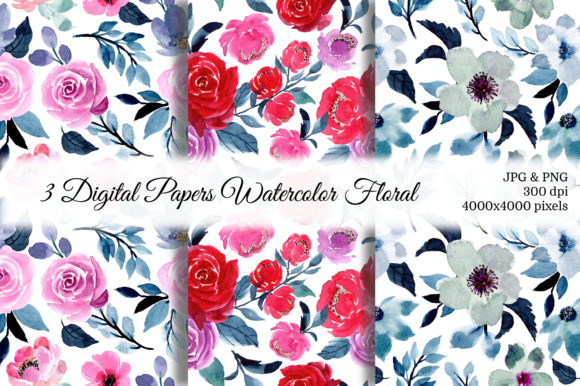
The primary differentiator for any digital paper or pattern resource is image fidelity. Seamless Pattern Floral Watercolor 30 provides files at 4000×4000 pixels with a resolution of 300 DPI. In the context of digital surface design, this specification serves as a critical benchmark. Many entry-level or budget-friendly pattern packs offer resolutions closer to 2000×2000 pixels or 72-150 DPI, which suffices for web graphics but fails under professional print scrutiny.
At 300 DPI, a 4000-pixel square translates to approximately 13.3 inches by 13.3 inches of printable area without upscaling. This dimension is significant for several reasons:
- Print Safety Margin: It exceeds standard letter and A4 paper sizes, allowing for full-bleed printing without pixelation.
- Scaling Flexibility: Designers can scale the pattern down to create denser repeats for stationery or scale up moderately for home decor items like throw pillows without losing edge definition.
- Watercolor Integrity: Watercolor textures rely on subtle grain and pigment bleeding. Lower resolutions often compress these organic details into muddy artifacts, whereas 300 DPI preserves the authentic brushwork characteristic of the medium.
When comparing this asset to vector-based alternatives, it is important to note that raster watercolor patterns capture organic texture that vectors simulate artificially. While vectors are infinitely scalable, they often lack the genuine chaotic nuance of real paint. Seamless Pattern Floral Watercolor 30 occupies a middle ground: it offers sufficient resolution for most physical products while retaining the authentic textural data that defines the watercolor style.
Dual Format Utility: JPG vs. PNG Workflows
A defining feature of this collection is the inclusion of both JPG and PNG formats for each of the three designs. This dual-delivery system addresses distinct workflow needs that single-format packages often overlook. Evaluating when to use each format is essential for maximizing efficiency.
JPG Files with White Backgrounds
The JPG versions included in Seamless Pattern Floral Watercolor 30 utilize a white background. This format is optimized for traditional surface pattern applications where the pattern serves as the base layer. The white background ensures consistent color rendering across different software platforms and reduces file size compared to uncompressed formats. These files are best suited for:
- Fabric Printing: Textile printers typically require RGB or CMYK files with solid backgrounds to ensure accurate color mapping.
- Stationery Design: For greeting cards, wrapping paper, and notebooks where the pattern covers the entire substrate.
- Digital Scrapbooking: Where the pattern acts as a foundational background element behind photos and journaling.
PNG Files with Transparent Backgrounds
The transparent PNG variants represent a significant value-add for composite design work. Unlike standard seamless patterns that lock the user into a specific background color, these files allow the floral elements to float independently. This capability shifts the asset from a simple background filler to a versatile design component. Practical applications include:
- Custom Colorways: Placing the transparent pattern over a custom-colored background layer allows for instant recoloring without complex masking or blend mode adjustments.
- Layered Compositions: Integrating florals between text layers, product mockups, or other illustrative elements.
- Non-Rectangular Applications: Using the floral cluster as a standalone motif for stickers, tags, or die-cut shapes without needing to manually remove the background.
Designers comparing this set to competitors should weigh the necessity of transparency. If a project strictly involves full-page backgrounds, the PNG files may be superfluous. However, for mixed-media projects or branding kits requiring flexible assets, the inclusion of pre-masked transparent files saves considerable post-processing time.
Aesthetic Positioning and Style Comparison
Seamless Pattern Floral Watercolor 30 falls within a specific niche of botanical illustration. When evaluating its fit for a project, it is helpful to understand how it compares to adjacent floral styles currently prevalent in the marketplace.
Versus Vintage Botanicals: Unlike dark, moody vintage reproductions that often feature heavy shadows and desaturated tones, this collection typically employs a lighter, fresher palette. This makes it more suitable for contemporary weddings, spring-themed products, and modern nursery decor, whereas vintage alternatives better suit antique restoration or gothic aesthetics.
Versus Flat Vector Florals: Vector florals offer clean lines and uniform colors ideal for corporate branding or minimalist tech accessories. Seamless Pattern Floral Watercolor 30, conversely, brings organic imperfection and emotional warmth. The tradeoff is precision; if a brand requires mathematically perfect symmetry and solid color fills, watercolor may appear too unstructured. However, for artisanal, handmade, or wellness brands, this organic quality is often a prerequisite rather than a limitation.
Versus Dense Tropical Patterns: Tropical patterns often maximize coverage with large, bold leaves and high contrast. The floral watercolor style discussed here generally offers more negative space and softer transitions. This distinction matters for readability; if the pattern must serve as a backdrop for overlaid typography, the softer watercolor approach usually provides better legibility than dense, high-contrast tropical alternatives.
Assessing Fit: When to Choose This Resource
No single digital asset is universally optimal. Determining whether Seamless Pattern Floral Watercolor 30 is the correct investment involves assessing specific project parameters against the asset’s characteristics.
Ideal Use Cases
This collection is particularly well-suited for creators who need immediate, print-ready assets without extensive editing. The 3-image variety pack provides enough variation to create a cohesive collection (e.g., a matching set of notebook, pen case, and bookmark) without appearing repetitive. It is an efficient choice for:
- Print-on-demand sellers expanding their catalog with low-risk, high-quality assets.
- Event planners designing cohesive wedding stationery suites.
- Digital product creators making planner inserts or digital sticker books.
- Crafters using Cricut or Silhouette machines who require high-DPI cut files via the PNG format.
Limitations and Alternatives
Recognizing limitations is as important as identifying strengths. There are scenarios where alternative resources would be more appropriate:
- Large Format Signage: While 4000px is substantial, billboards or large wall murals may require vector art or ultra-high-resolution photography to avoid visible tiling or softness at viewing distances under five feet.
- Strict Brand Color Matching: Raster watercolor blends are difficult to recolor precisely. If a project demands exact Pantone matching across all elements, custom vector illustration or solid-color geometric patterns offer greater control.
- Exclusive Licensing Needs: As a digital download, this asset is likely non-exclusive. Brands requiring trademarkable, unique visual identities should commission original artwork rather than licensing stock patterns.
- Dark Mode Interfaces: Watercolor on white backgrounds can be challenging to adapt for dark-mode UI design without significant inversion or blending adjustments. Assets specifically designed for dark interfaces may integrate more smoothly.
Practical Considerations for Integration
Beyond aesthetics and specs, practical integration factors influence the long-term value of the purchase. Users evaluating Seamless Pattern Floral Watercolor 30 should consider their existing software ecosystem and output goals.
For Adobe Photoshop and Affinity Photo users, the layered potential of the PNG files enables non-destructive editing workflows. Smart Objects can be used to apply the pattern to curved surfaces in mockups while maintaining editability. Conversely, users of Canva or similar browser-based tools will find the pre-sized 4000px dimensions convenient, as they avoid the upload restrictions or compression issues sometimes associated with excessively large files.
File management also warrants consideration. Six high-resolution files (three JPG, three PNG) at this dimension require adequate storage and organized naming conventions. Professionals integrating this into a larger library should establish a tagging system immediately upon download to distinguish these specific watercolor florals from other botanical assets.
Finally, licensing terms must always be verified against intended use. While the technical specs support commercial printing, the license dictates legality. Users planning to sell physical products featuring Seamless Pattern Floral Watercolor 30 should confirm that the license permits end-product sales versus digital redistribution. This legal due diligence is as critical as checking DPI, ensuring that the creative investment remains secure and compliant.
Ultimately, the decision to acquire Seamless Pattern Floral Watercolor 30 should stem from a clear alignment between its specific attributes—4000px resolution, dual-format flexibility, and soft botanical aesthetic—and the tangible requirements of upcoming projects. By weighing these factors against available alternatives, designers can build a resource library that supports both current deliverables and future creative exploration with confidence and precision.