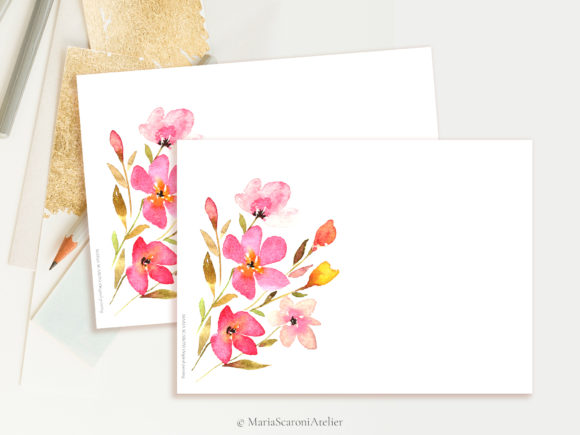
Printable Watercolor Floral Card: Creative Uses
There is a distinct warmth to hand-painted art that digital graphics often struggle to replicate. When you choose a Printable Watercolor Floral Card, you are not simply downloading a template; you are accessing original artwork painted on textured watercolor paper. This tangible origin gives the final printed piece an organic depth and softness that elevates it above standard greeting cards. For creators, small business owners, and hobbyists, this resource bridges the gap between professional artistic quality and the convenience of at-home printing. The versatility of this specific 5x7 format allows for both traditional folded greetings and modern flat stationery, making it a practical asset for various creative projects.
Understanding the File Formats and Layouts
To get the most out of your Printable Watercolor Floral Card, it is essential to understand the two distinct PDF layouts provided. Each serves a different functional purpose, allowing you to adapt the design based on your immediate needs. Both files include gray cut lines to ensure precision, but their end results differ significantly.
- The Folding Card Format: This PDF is designed for a single 5x7 card on a US Letter or A4 sheet. It includes specific gray guidelines for cutting and folding. This layout is ideal for traditional correspondence where you need an interior space for a handwritten message. The fold creates structural integrity, making it feel like a premium store-bought card.
- The Non-Folding Card Format: This version places two 5x7 designs on a single page. These are intended to be cut apart to create flat cards or postcards. This format maximizes paper efficiency and is perfect for announcements, product packaging inserts, or art prints where a fold is unnecessary.
Recognizing which file to use before you print saves time and materials. The gray cut lines are subtle enough not to interfere with the watercolor aesthetic but visible enough to guide your scissors or paper trimmer accurately. Always follow these marks closely to maintain the professional balance of the floral composition.
Practical Applications for Entrepreneurs and Creatives
For those running a business or managing a brand, consistency in visual identity is key. A Printable Watercolor Floral Card offers a cost-effective way to maintain high-quality touchpoints with clients without the lead time or minimum order quantities associated with professional offset printing. Because the artwork was hand-painted, it carries an authenticity that resonates with customers seeking genuine connections.
Elevating Product Packaging
Small business owners can utilize the non-folding card variation as a value-add in shipping. Placing a beautifully illustrated floral card inside a package transforms a routine delivery into an unboxing experience. Use the back of the flat card to print care instructions, a discount code for future purchases, or a simple thank you note. This dual-purpose approach adds perceived value to your products while reinforcing brand loyalty through tactile, artistic engagement.
Event Stationery and Invitations
Weddings, baby showers, and intimate gatherings often require stationery that feels personal yet polished. The 5x7 folding card size is standard for invitations and response cards. By printing these at home or through a local shop, you retain full control over the timeline. If you need to add last-minute details or adjust guest counts, you can reprint specific elements without wasting an entire batch of pre-printed stationery. The watercolor texture provides a romantic, soft backdrop that suits celebratory occasions perfectly.
Printing Best Practices for Authentic Results
The beauty of a Printable Watercolor Floral Card lies in its texture. To preserve the hand-painted quality when transferring from screen to paper, material selection is just as important as the digital file itself. Standard copy paper will result in a flat, disappointing image. Instead, opt for cardstock specifically labeled for watercolor or mixed media.
Paper weight matters significantly for the 5x7 format. For folding cards, a weight between 80lb and 100lb cover stock provides enough stiffness to stand upright while still being pliable enough to fold without cracking the ink. For non-folding cards or postcards, consider going up to 110lb or higher to ensure durability. Always check your printer’s specifications regarding maximum paper thickness to avoid jams.
Color calibration is another critical factor. Watercolors rely on subtle gradients and translucent layers that monitors display differently than inkjet or laser printers. Colors may vary slightly depending on your computer monitor settings and printer profile. Before printing a full batch, run a test print on your chosen paper. Adjust your printer settings to "High Quality" or "Photo Paper" mode to ensure the ink saturation matches the vibrancy of the original painting. If using a local print shop, request a physical proof to verify that the gray cut lines align correctly with your trimming equipment.
Creative Customization and Personalization
While the floral artwork is complete, the negative space on a Printable Watercolor Floral Card invites your own creative input. This is where the resource transitions from a static image to a dynamic tool for expression. Since fonts and mockups are not included, you have the freedom to pair the illustration with typography that matches your specific voice or project theme.
Consider the hierarchy of text against the watercolor background. Darker washes may require white or metallic ink for legibility, while lighter areas accommodate charcoal or deep navy typefaces. Hand-lettering directly onto the printed card adds another layer of artisanal charm, echoing the hand-painted nature of the florals. For digital creators, scanning the printed card back into your computer can provide a textured overlay for social media graphics or website backgrounds, extending the utility of the purchase beyond physical stationery.
Organizing Your Creative Workflow
Incorporating printable assets into your workflow requires organization to remain efficient. Keep your original PDF files in a dedicated folder structure categorized by size and type (folding vs. non-folding). This prevents accidental overwriting and ensures you always access the correct version. When planning a project, determine your quantity needs first to calculate paper usage. Remember that the non-folding layout yields two cards per sheet, effectively halving your paper cost compared to the folding layout.
For educators or workshop leaders, these cards serve as excellent teaching aids. They can be used in art classes to discuss composition and color theory, or in writing workshops as prompts for descriptive exercises. The accessible 5x7 size makes them easy to handle and distribute. By providing students with a high-quality visual starting point, you remove the intimidation of a blank page and allow them to focus on skill development.
Respecting Artistic Integrity and Usage
When working with hand-painted resources, it is important to remember the human element behind the file. The watercolors were created on textured paper by an artist, meaning every brushstroke and pigment bloom was intentional. Treat the Printable Watercolor Floral Card with the same respect you would offer a physical painting. Avoid heavy digital manipulation that destroys the natural grain of the paper or alters the color palette beyond recognition.
Finally, manage expectations regarding color accuracy. Digital screens emit light, while printed paper reflects it. No amount of calibration can make a print look identical to a backlit display. Embrace these slight variations as part of the medium's character. The goal is not pixel-perfect replication, but rather a faithful translation of artistic intent into a tangible object. Whether you are sending a heartfelt note, branding a product, or exploring your own creativity, this printable resource offers a grounded, beautiful foundation for your work. Enjoy the process of bringing these hand-painted florals to life in your own unique context.